Japandi Wall Art: Create Calm Spaces with Ease
Key Takeaways
- Japandi wall art blends Japanese minimalism and Scandinavian warmth, using neutral palettes, natural materials, negative space, and clean lines to create visual calm;
- The best pieces are soft abstracts, nature motifs, and black and white prints, often oversized so they anchor a room without overwhelming it;
- You can create a Japandi look with your own photography, choosing muted colors, organic subjects, and balanced cropping that emphasizes simplicity and subtle texture;
- Mixtiles makes styling effortless with adhesive, repositionable frames and gallery wall kits, so you can test layouts without tools or wall damage.
Japandi wall art is the meeting point of Japanese minimalism and Scandinavian coziness, a style defined by clean lines, earthy tones, and generous negative space that settles a room. If you love interiors that feel light, warm, and intentionally uncluttered, Japandi is a perfect match. This guide explains what is japandi wall art, which subjects and colors work, how to pick sizes, and how to plan gallery walls. You will also learn how to turn your own photos into calming, modern art prints, then hang them in minutes with Mixtiles.
Create a Japandi wall in minutes with our signature photo tiles. Upload your photos, pick a simple oak, black, or white frame, and stick them up. No nails, no stress, and 100 percent repositionable.
What is Japandi wall art exactly?
Japandi wall art unites Japanese minimalism with Scandinavian design philosophies. It favors simplicity, natural materials like wood and linen textures, and a palette of calming neutrals. The art completes a space rather than competing with it, using negative space and clean lines to create quiet balance.
Key characteristics you will notice include a nature inspired palette, often warm white, oatmeal, clay, soft gray, sage, or muted black. Forms are restrained: soft geometry, organic lines, and subtle, abstract shapes. Surfaces look matte and tactile instead of glossy. Subjects are calm and grounded, featuring reeds, stones, branches, misty landscapes, or minimalist line work. The result is a modern look that brings warmth and order into your home decor without visual noise.
What subjects, colors, and textures feel most Japandi?
Think quiet subjects from nature, a limited neutral palette with soft accents, and textures that feel handcrafted. This approach brings harmony to interiors and supports a light, airy atmosphere.
Subjects that work
Soft abstracts featuring flowing shapes and tonal gradients feel at home in Japandi interiors. Nature themes are an ideal fit: grasses, stones, waves, tree silhouettes, ceramics, and misty landscape views. Minimal line drawings, balanced grids, and subtle geometric designs read quietly from across the room. Choose an art print or a custom canvas print that looks serene at a distance, then reveals a gentle texture up close.
The Japandi palette
Neutral tones are the foundation, including warm white, beige, oatmeal, clay, soft gray, and muted black. You can add restrained accents for depth: dusty blue, sage, or a soft terracotta pink. Keep saturation low so the wall decor supports the space instead of taking it over. Neutral wall art makes it easy to tie together wood furniture, stone, linen, and other natural materials.
Texture and finish
Texture matters. Go for matte finishes, grainy or chalky surfaces, and paper or canvas that looks softly tactile. Frames in oak, black, or soft white keep the design warm and minimal. If you love the look of natural materials like wood, choose an oak tone to echo your Scandinavian designs and Japanese wabi sabi touches.
Can photography be Japandi?
Yes. Minimalist photography is one of the best ways to achieve Japandi calm. Choose organic subjects, simplify the scene, and edit for muted, neutral tones. Black and white is a strong option that delivers clean, timeless style.
Photo subjects that fit
Look for close up botanicals, tree branches against soft sky, shoreline textures, pebbles on sand, stone or stucco details, and negative space architecture. Foggy horizons and soft morning light create a calming atmosphere that aligns with Japandi interiors. Avoid crowded street scenes or highly saturated colors that fight the room.
Editing tips for a Japandi look
Reduce saturation or convert to black and white for a clean, modern view. Ease contrast so midtones feel soft. Lift shadows slightly, and keep highlights gentle. Crop with breathing room around your subject to emphasize negative space. Before shooting, declutter edges in the frame so the final piece feels quiet and intentional.
Quick checklist
Use this quick screen before you print:
- Simple subject with organic forms or clean lines;
- Soft, muted palette or black and white without heavy contrast;
- Balanced composition that leaves negative space to breathe;
- Matte presentation that reduces glare and keeps the look subtle.
How big should Japandi wall art be, and how many pieces should I use?
Go larger than you think. One oversized piece usually feels calmer than several small ones. For a sofa or bed, aim for art that is roughly two thirds of the furniture width, hung at eye level with comfortable spacing so the wall reads clean.
Size and scale rules of thumb
If you want an effortless result, size to the furniture beneath and keep the bottom edge 6 to 10 inches above. Pairs and diptychs can be especially serene, since two medium pieces leave generous negative space and clear sightlines. The table below matches common furniture widths with suggested Mixtiles sizes for a balanced photo gallery wall in both inches and centimeters.
Want exact proportions for every room? Use our wall art size guide for formulas you can apply to sofas, beds, and dining areas.
|
Furniture width |
Recommended art width |
Suggested Mixtiles size options |
Metric guide |
|---|---|---|---|
|
60 in sofa |
40 in to 44 in |
2 × 20 × 27 tiles side by side, or 1 × 22 × 44 centerpiece |
152 cm sofa, art 102 cm to 112 cm; two 50.8 × 68.58 cm, or one 55.88 × 111.76 cm |
|
72 in sofa |
48 in |
1 × 27 × 36 centerpiece, or 2 × 20 × 27 with wider spacing |
183 cm sofa, art 122 cm; one 68.58 × 91.44 cm, or two 50.8 × 68.58 cm |
|
Queen bed, 60 in |
40 in |
2 × 12 × 16 over the headboard, or 1 × 20 × 27 centered |
152 cm bed, art 102 cm; two 30.48 × 40.64 cm, or one 50.8 × 68.58 cm |
These sizes help you get the scale right without guesswork. If your wall is smaller, a 12 × 16 or 12 × 12 print can still feel calm, especially when framed with a printed border that adds visual air.
Less is more
Japandi style prizes simplicity. Choose a single focal piece or a tight, symmetrical pair. If you build a gallery, keep it compact, cohesive, and airy so your wall reads as one calm composition rather than many competing pieces.
How do I plan a Japandi gallery wall without overdoing it?
Keep the layout simple and the palette tight. Favor even spacing, consistent frames, and enough negative space around the group so the wall breathes.
For spacing tips and printable templates, see our tutorial on how to arrange art on a wall.
Layout recipes that work
- The Quiet Grid: arrange four to six same size tiles in a clean matrix. Keep the spacing wide and even so the grid becomes a gentle structure, not a busy block.
- The Balanced Pair: place two medium pieces side by side with the same bottom line and a comfortable gap. This is great over a console or in a dining room.
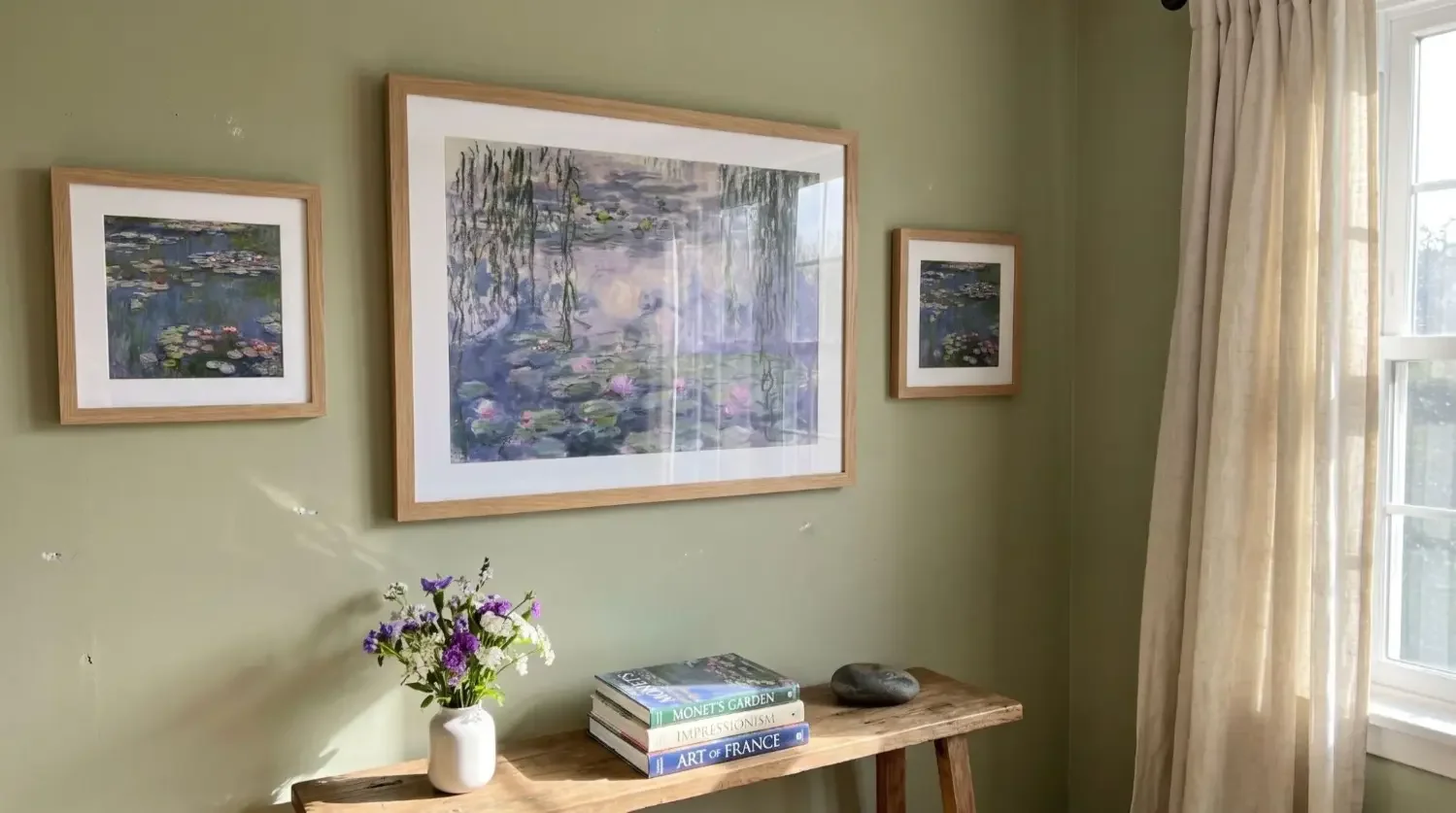
- The Anchor and Echo: hang one large focal piece, then place a smaller supporting piece nearby on the same axis to add rhythm without clutter.
Cohesion tips
Choose a single frame color across the gallery, for example all oak or all soft white. Stick to one palette and theme per wall, like black and white landscapes or sage toned abstracts. Use consistent margins and sightlines so your gallery feels designed, not accidental.
Test a Japandi layout now. Our frames are lightweight, adhesive, and fully repositionable, so you can perfect your gallery walls until the negative space feels just right. Try a Gallery Wall Kit to skip measuring and get a ready to hang template.
Which rooms does Japandi wall art suit best, and where should it go?
Japandi fits nearly any interior design scenario because it brings calm without overwhelming the room. Select subjects and sizes that match the function of each space, then hang at eye level for comfort.
Living room

Anchor the seating area with an oversized abstract or serene landscape. Align the width to about two thirds of your sofa, and keep the bottom edge 6 to 10 inches above the back. Black and white prints can create crisp focus, while muted blue or clay tones add warmth. For more layout inspiration over sofas, explore our above couch wall decor ideas.
Bedroom

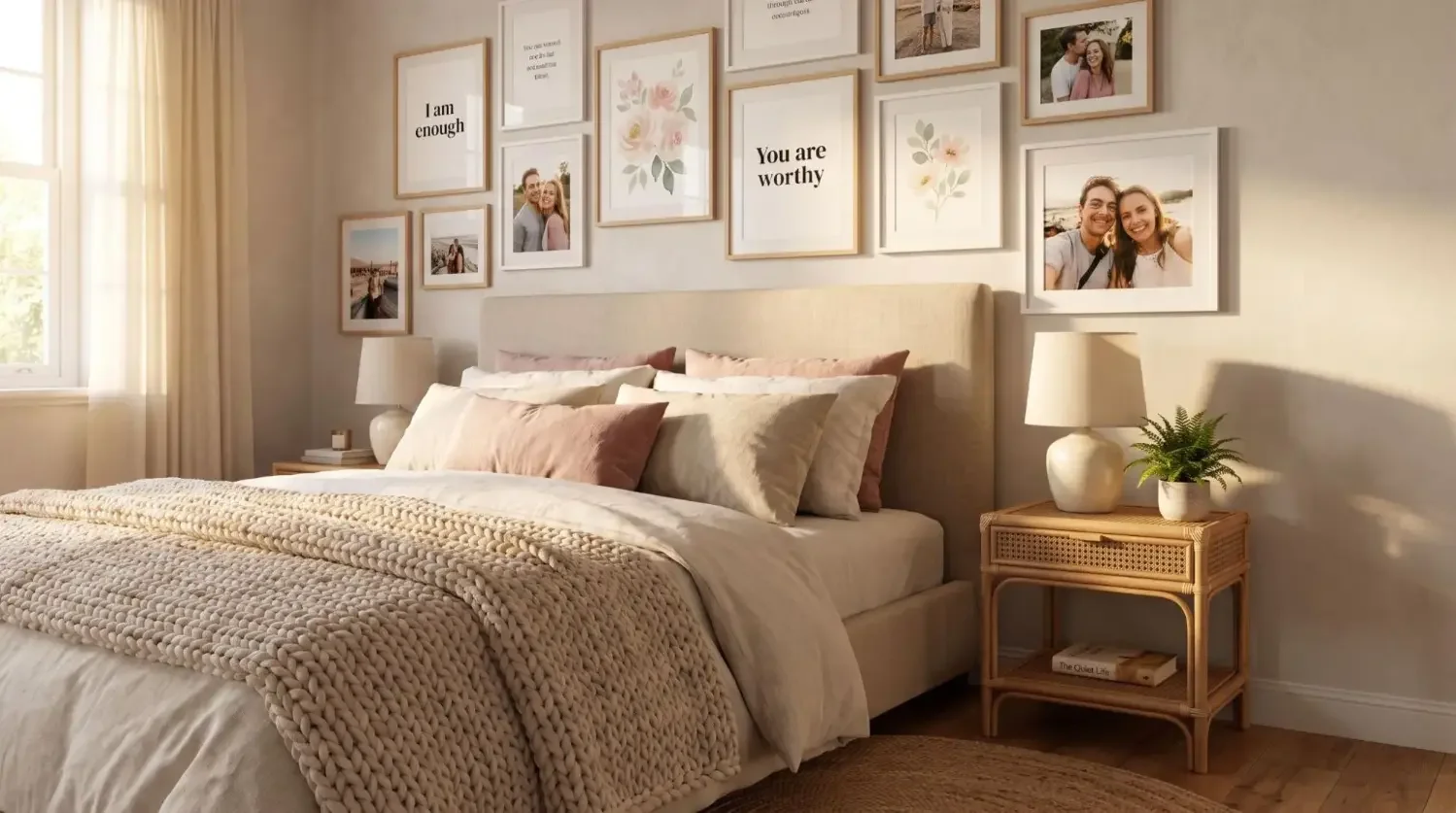
Use a soft diptych or a single calm art print above the headboard. Choose neutral tones and subtle texture for a restful view that complements linen bedding and wood side tables.
Entryway and hallway

Pick one understated piece to set the mood as you enter. Keep clear wall space around it so the area feels open. A quiet branch silhouette or a minimal landscape is ideal.
Home office

Minimalist art supports clarity and focus. Choose clean lines, gentle palettes, and compositions with negative space. Avoid overly detailed imagery that can distract from work.
What frames and finishes complement Japandi best?
Frame choice shapes the whole look. Natural oak adds warmth and echoes like wood furniture. Slim black frames create light contrast that still feels refined. Soft white frames give a minimal, gallery like edge. Surfaces should be matte so light does not glare across the print. Keep spacing even and margins consistent so your wall art reads as one calm collection.
How can I create Japandi wall art with Mixtiles in minutes?
Upload your photos, refine the look, and select a simple frame style. Because Mixtiles are adhesive and repositionable, you can create, place, and adjust a Japandi gallery without tools or nails.
Turn your photos into Japandi pieces
Start with organic subjects from your camera roll, such as reeds, soft waves, or stone textures. Apply light edits to mute color or switch to black and white. Balance the crop so there is generous negative space. In the Mixtiles builder, choose oak, black, or white frames and consider a printed border to add breathing room. If you prefer licensed artwork, explore our Fine Art Prints collection or shop curated neutral wall arts that suit Japandi interiors.
Build your layout effortlessly
Test your arrangement on the floor first. Then peel, stick, and step back to fine tune spacing on the wall. Mixtiles work on flat painted walls, and many customers also place them on textured walls, wood paneling, or wallpaper. Clean with a dry, soft cloth. If you want a thicker look, switch to Canvas Prints for a contemporary edge. Shipping is available in many regions, including the United Kingdom. If you are renting or want to avoid tools, here is how to hang wall art without nails.
Common mistakes to avoid for a true Japandi feel
Before you press order, run through these pitfalls and keep your wall clean and calm:
- Too many small pieces that create visual chatter instead of one serene view;
- High gloss papers or overly bright colors that fight neutral tones and soft light;
- Mixing several frame colors or styles on a single wall, which breaks cohesion;
- Busy subjects with little negative space, or hanging too high above furniture.
Japandi wall art is about quiet presence and thoughtful restraint. It blends Japanese minimalism and Scandinavian design so your interior feels centered and warm. Whether you choose abstract art, black and white landscape photography, or soft neutral tones, the goal is balance, simplicity, and a sense of nature. With Mixtiles, you can create a Japandi wall in minutes, and adjust spacing until it is perfect, all without nails or damage. Use a gift card to share the calm with someone you love, and get started today.
Bring Japandi calm home now. Turn your photos into art with our high quality canvas prints, and create a serene wall today.
Frequently Asked Questions
What is Japandi wall art?
Japandi wall art blends Japanese minimalism with Scandinavian warmth. Expect neutral palettes, clean lines, and generous negative space. Subjects skew organic, like soft abstracts, botanicals, and quiet landscapes. Finishes are matte and tactile. The goal is calm balance that supports your room rather than competing with it.
What are the core rules of Japandi style?
Follow seven principles: simplify forms, use natural materials, keep a muted neutral palette, prioritize function and comfort, embrace negative space, highlight craftsmanship and texture, and minimize clutter with concealed storage. Apply these to art and furniture for a cohesive, airy home that feels warm and deliberate.
Is Japandi still in style?
Yes. Designers and architects note that Japandi remains strong, valued for clean lines, neutral palettes, and uncluttered design. Reports from Singapore indicate the style that dominated in 2025 is not going anywhere in 2026. Its restraint reads timeless, so it endures beyond short-term trends.
What Japandi décor mistakes should I avoid?
Common pitfalls include mixing too many styles, using glossy finishes, overcrowding walls with small pieces, harsh or saturated colors, and inconsistent frames. Fix them by sticking to Japandi fundamentals, choosing matte textures, editing accessories, favoring fewer larger artworks, keeping a muted palette, and aligning spacing consistently.

Sé el primero en saber — ofertas, noticias e ideas de decoración.
Al registrarte, aceptas los Términos de uso y la Política de privacidad de Mixtiles