What is Scandinavian Art? Discover Its Timeless Beauty
Key Takeaways
- Scandinavian art centers on light, landscape, and craft, from Viking carvings to modern minimalism;
- It mainly spans Denmark, Norway, and Sweden, while overlapping with broader Nordic art and culture;
- Folk traditions like rosemaling, kurbits, and Dala horses shaped decorative arts and interior design;
- You can bring the look home with nature photos, soft palettes, and simple grids printed as Mixtiles.
Wondering what is Scandinavian art and why it feels so calm and timeless? From Viking patterns to modern art in the 19th century and 20th century, Scandinavian artists captured nature, light, and everyday life with elegant restraint. This guide explains the history of Scandinavian, key motifs, and practical ideas to style your walls in a clean, Swedish and Danish inspired way.
Bring Scandinavian calm to your walls. Print your nature photos on lightweight, adhesive photo tiles, which are repositionable and renter friendly.
What is Scandinavian art, exactly?
Scandinavian art refers to the art and decorative traditions of Denmark, Norway, and Sweden. It is often confused with Nordic art, which also includes Finland, Iceland, and other Nordic countries. Across periods, Scandinavian work favors simplicity, function, and nature. Think quiet interiors, cool light, and an emphasis on craftsmanship that shaped interior design and modern art alike.
How did Scandinavian art evolve from Vikings to today?
It moved from interlaced Viking ornament to national romantic painting, then into contemporary explorations of light and space. The thread is a close relationship to land, culture, and everyday life.
Viking and medieval roots
Norse artisans created intertwined animal motifs in the Jelling, Ringerike, and Urnes styles, carved in wood, stone, and metal. This early period, richly symbolic, set a pattern vocabulary that later decorative arts often echoed.
19th–20th centuries and national identity
Artists in Norway and Sweden embraced landscape and everyday scenes. Edvard Munch and Vilhelm Hammershøi brought psychological depth and quiet interiors, often in oil on canvas. This classic medium is perfect for capturing the soft light and mood of Nordic scenes, a look you can achieve with modern canvas prints. National romanticism and folk revivals connected fine art to swedish folk art and community life.
Contemporary directions
Modern and contemporary artists explore light, space, and concept. Installations and photography, like Olafur Eliasson’s projects, reframe nature indoors. Minimalist abstraction and serene palettes pair naturally with today’s design focused homes from Oslo to New York.
What defines Scandinavian folk art?
Scandinavian folk art includes regional forms created for homes and community events. In Sweden you see dalmålning and kurbits. In Norway, rosemaling scrolls and floral painting. Woodcarving, textiles, and paper cutting were common.
- Motifs: Stylized flowers, vines, birds, and Dala horses with rhythmic symmetry;
- Materials: Painted wood, woven textiles, carved utensils, and decorative metalwork;
- Palette: Bold yet balanced reds, blues, greens, grounded by natural tones;
- Influence: These patterns informed later design, modern minimalism, and decorative arts.
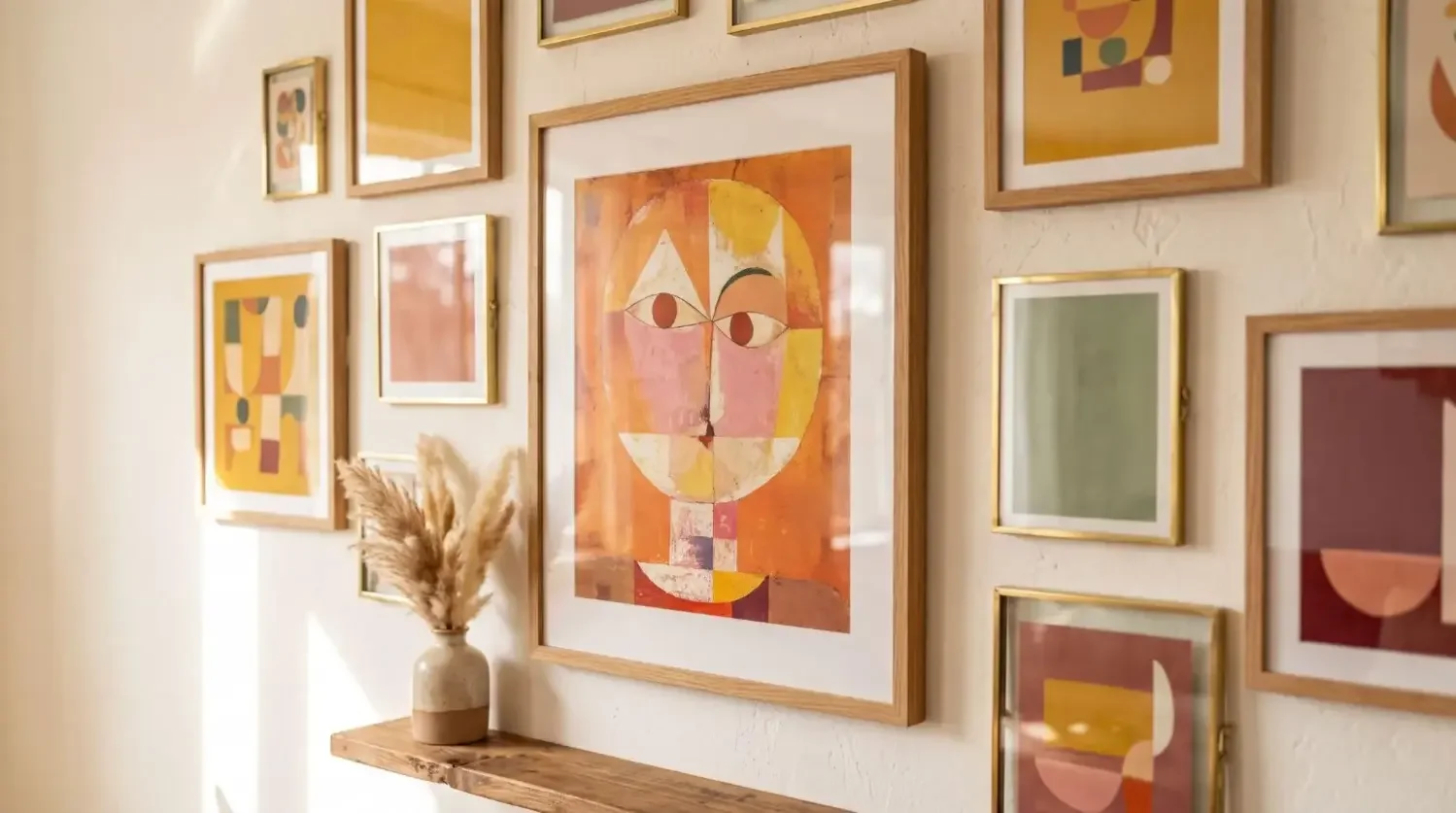
Create a clean Scandinavian-style look with our collections of gallery walls. Explore our curated wall arts for inspiration, then upload your own photos to arrange a perfect grid with Mixtiles, no measuring or nails.
How does “Scandi design” influence art, and your walls?
Design and art in Scandinavia often share values: natural materials, negative space, and functional beauty. Hammershøi’s quiet rooms and many 20th century painting trends align with today’s restrained interiors. For your home, keep frames consistent, allow breathing room, and repeat spacing so the eye rests easily. A subtle rhythm of light tones and soft contrast feels distinctly Nordic.
How can you bring Scandinavian art vibes into your home?

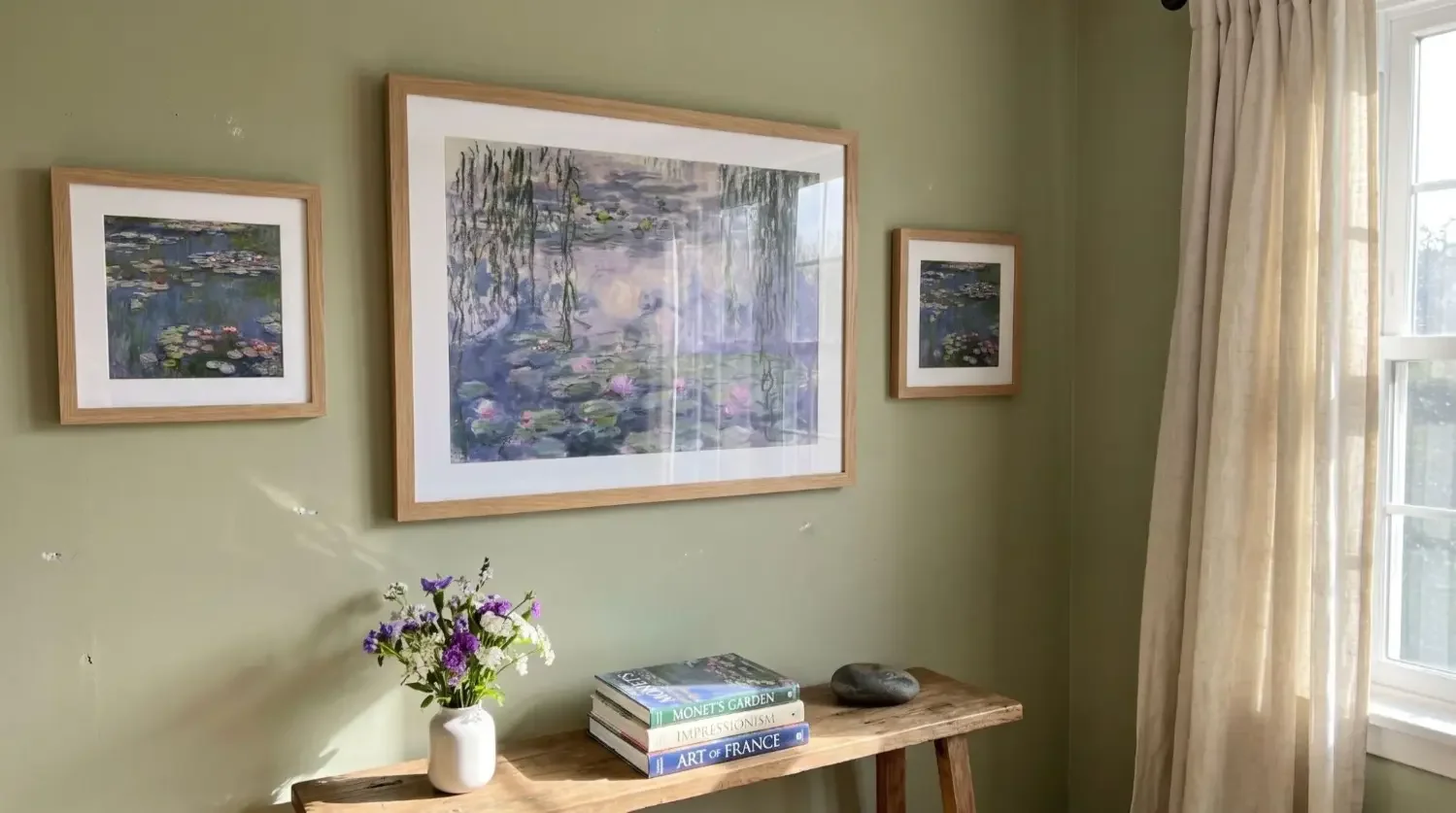
Start with subjects that celebrate nature and simplicity, then present them with clarity and consistency. Mixtiles make it easy to test layouts, then restick until it feels right.
Choose motifs and subjects
Pick nature scenes, soft light, quiet interiors, simple still lifes, or folk-inspired graphics created from your travels across Scandinavia or your own neighborhood.
If you are deciding what to print, our guide on how to choose wall art can help you match subjects and styles to your room.

Embrace palette and negative space
Work with whites, grays, muted blues and greens, plus warm woods. Let images breathe, and avoid visual clutter.
Curate a simple grid or line
Consistent sizes keep a calm rhythm. For a classic square grid, consider our popular 8x8 canvas prints or larger 12x12 canvas prints. These suggestions fit most spaces and styles.
Not sure which dimensions fit your space? Explore our wall art size guide to choose proportions that feel balanced.
|
Layout |
Tile size (in) |
Tile size (cm) |
|---|---|---|
|
3 × 3 Grid |
8.4 × 8.4 |
21.35 × 21.35 |
|
Linear Trio |
12.44 × 12.44 |
31.6 × 31.6 |
|
Statement Row |
12.44 × 16.44 |
31.6 × 41.75 |
- Plan your grid on the floor, then measure equal spacing on the wall;
- Stick the first Mixtile at eye level centered on your layout, then align the rest;
- Step back, adjust, and restick until the rhythm feels balanced.
For exact eye-level rules and spacing, read how high to hang art on a wall and how to arrange art on a wall.
Scandinavian art is a centuries long dialogue between light, land, and life. If you searched what is Scandinavian art, the answer is simple and deep: nature forward, human centered, and beautifully restrained. Start with a soft palette, a tidy grid, and photos you love. Mixtiles frames let you experiment without holes or stress.
Ready to build your Scandinavian inspired photo gallery wall? Create your own personalized canvas prints by uploading your photos to Mixtiles and get repositionable frames delivered to your door.
Frequently Asked Questions
How would you describe the look of Scandinavian art?
Calm compositions, soft light, and nature focused subjects define Scandinavian art. Fine art often shows quiet interiors, luminous landscapes, and minimal forms. Folk traditions add rhythmic geometry and florals, like rosemaling and kurbits, painted on wood or textiles. Palettes are muted, with gentle neutrals, blues, and greens.
Which countries are included in Scandinavia, and how is it different from the Nordics?
Strictly speaking, Scandinavia includes Denmark, Norway, and Sweden. People sometimes add Finland and Iceland, but those belong to the broader Nordic region, along with territories like the Faroe Islands. The terms overlap in culture and themes, yet history and languages differ.
Who is the most famous Scandinavian artist?
Edvard Munch is often cited as the most famous Scandinavian artist, known for The Scream and pioneering modern expression. Other celebrated names include Vilhelm Hammershøi for quiet interiors, and Carl Larsson for luminous domestic scenes that shaped the region’s visual identity.
What makes Scandinavian folk art unique?
Scandinavian folk art blends symbolism, symmetry, and everyday craft. Motifs like stylized flowers, vines, birds, and Dala horses carry meanings tied to nature, fertility, and protection. Techniques include rosemaling scrolls and kurbits painting, using balanced reds, blues, and greens on carved wood, textiles, and home objects.


Soyez les premiers informés — offres, actualités et idées déco.
En vous inscrivant, vous acceptez les Conditions d'utilisation et la Politique de confidentialité de Mixtiles.